Eastern Copperhead Venomous
The most common venomous snake found in Virginia.
Head
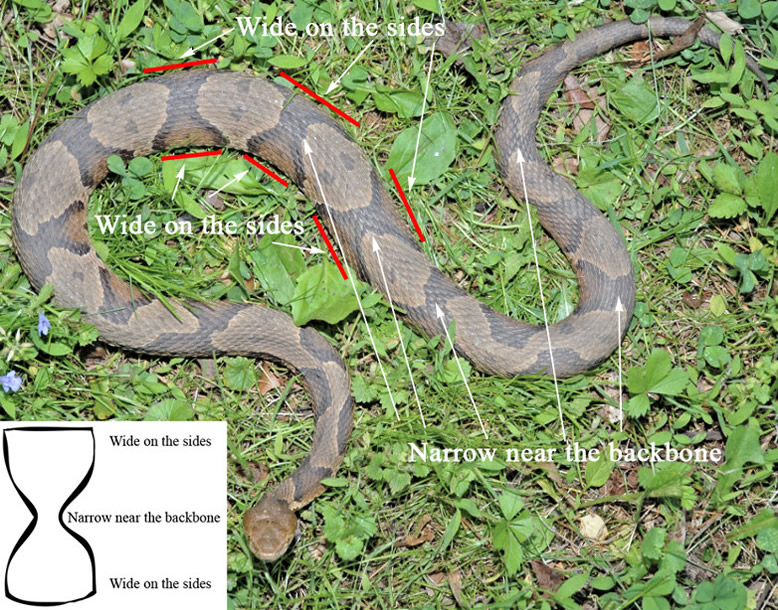
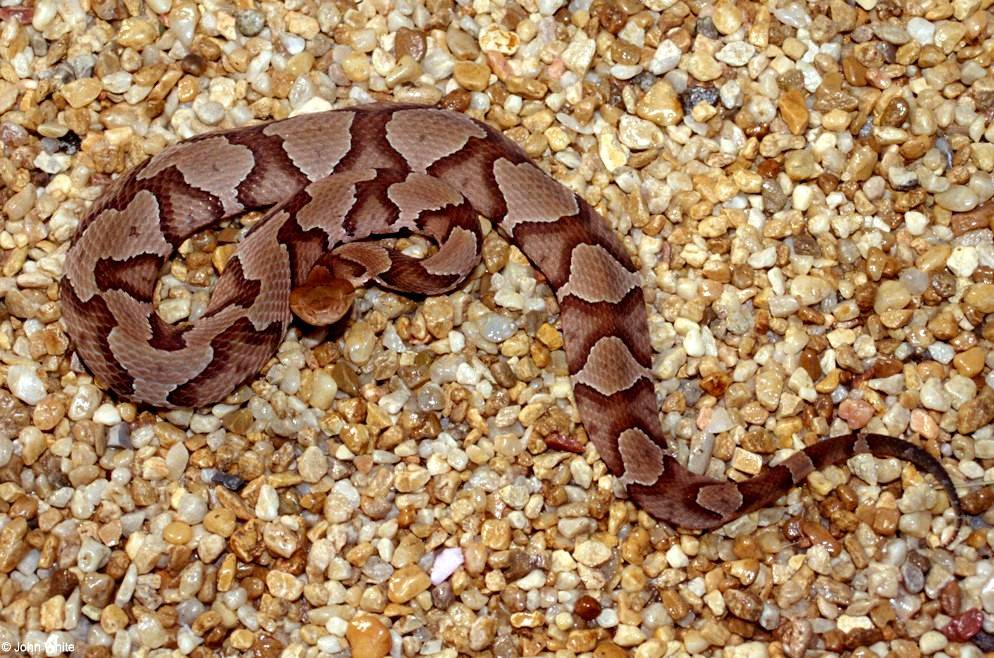
Coppery-red head, often triangular shaped
Body Pattern
Hourglass-shaped bands that resemble Hershey's Kisses — narrow near the backbone, wide on the sides
Color
Juveniles are colored and patterned as adults, but the tip of the tail is sulfur yellow
Where Found
Found almost all across Virginia
Northern Cottonmouth aka Water Moccasin Venomous
Opens its mouth wide when threatened, appearing white like cotton!
Head
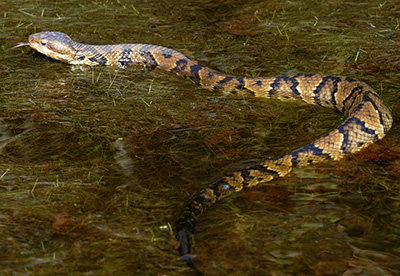
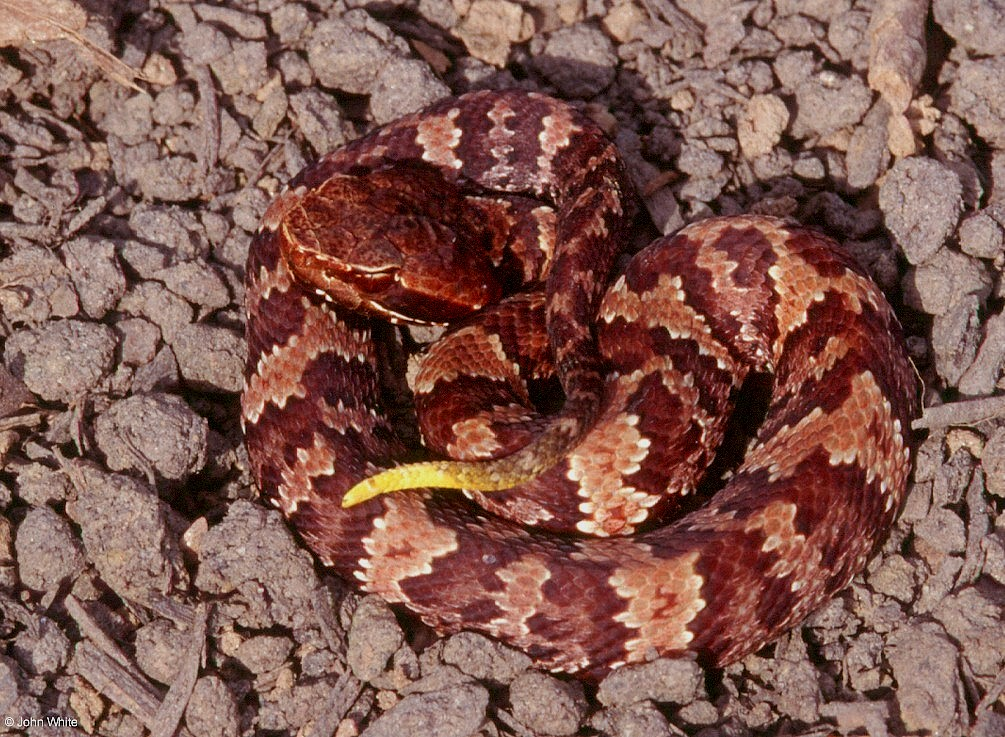
Dark with a mask above their eye — like the "Mask of Zorro!"
Body Pattern
Dark, thick-bodied with a Christmas Tree-like (or dumbbell) pattern, broader at the bottom, narrow on top. Some may appear dark with no patterns.
Size
Can grow up to 50–60 inches, usually with a thick large body
Prey
Fish, reptiles, amphibians (frogs), small mammals, and invertebrates
Where Found
Near Virginia Beach area (South East Virginia)
Juveniles
Have sulfur-yellow tail tip with brighter pattern colors
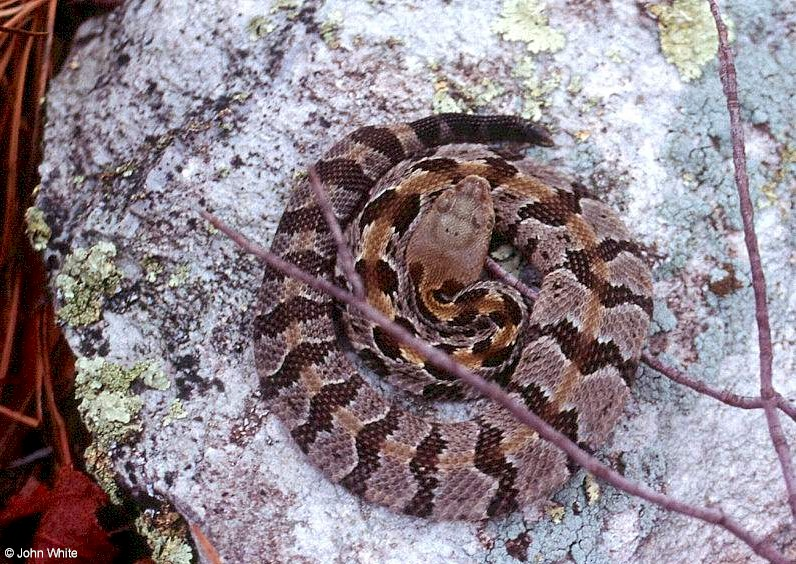
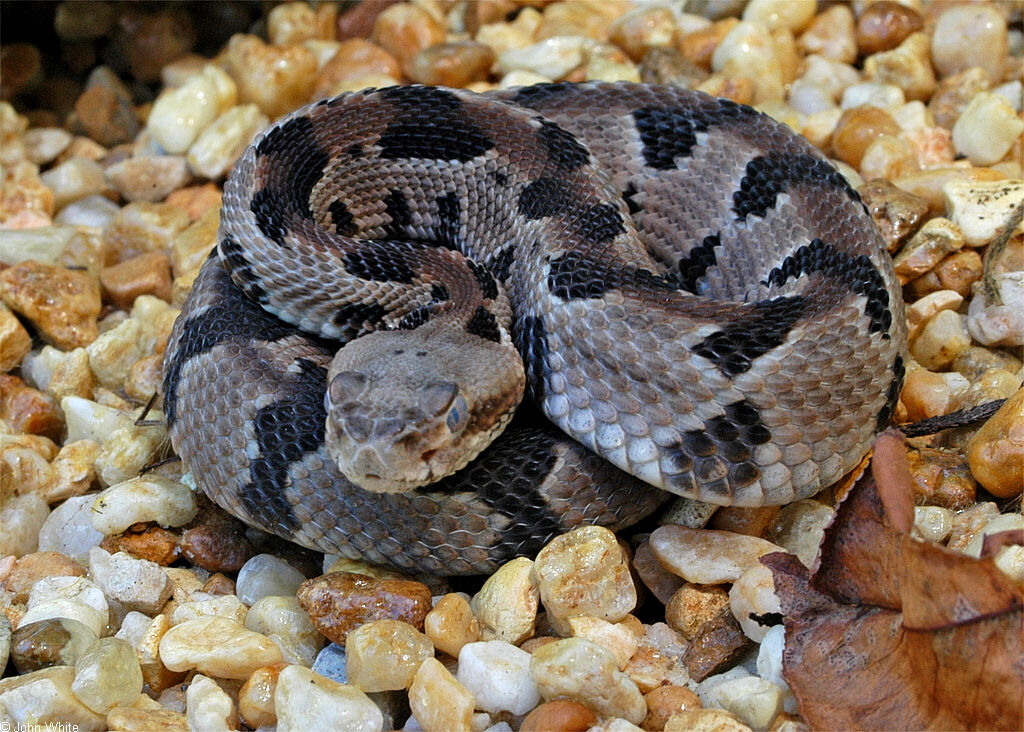
Timber Rattlesnake aka Canebrake Venomous
Has a rattle on its tail and black zig-zag patterns (like inverted V shapes).
Body Pattern
Highly variable in color, most possess a series of zigzag-shaped blotches (chevrons) and crossbands on dorsum
Size
Can grow up to 6 feet in length
Prey
Squirrels, rats, mice, cottontail rabbits, six-lined racerunners, skinks, and birds
Where Found
Mostly in North Eastern Virginia mountains and some areas near South West Virginia