Richmond, VA · WCO Licensed · Free 24/7 Rescue

Snakes are neighbors,
not nightmares.

Transforming human-snake conflicts into coexistence solutions through free rescue, education, and proven intervention strategies - across Greater Richmond.

Get Help Now → Our Services Call (804) 404-5594 WhatsApp

🐍 No-kill removal & relocation · Free 24/7 · Greater Richmond

Virginia Wildlife Control Operator — WCO Licensed and Certified

30+
Snake species native to Virginia
3
Of them are venomous
$0
Cost for rescue & relocation
24/7
Emergency response
What We Do

Our Services

Most Requested

Free Snake Relocation

Our dedicated rescue team safely removes and relocates snakes found on your premises - ensuring safety for both you and the snake. This service is vital for emergency snake situations.

Request Rescue →

Snake ID Help

Spotted a snake and not sure what it is? Send a photo to this Facebook group and you'll get the identify of your visitor and tell you whether it's harmless, usually within few minutes. No need to guess, and never a reason to harm it.

Identify a Snake →

Community Education

Free talks, school visits, and field demonstrations that turn fear into fascination - for kids and adults alike. Learn how snakes keep our ecosystem (and your yard) healthy.

Book a Talk →
Get to Know Your Neighbors

Meet Virginia's Snakes

Most snakes you'll meet in Virginia are completely harmless and quietly helpful. Get to know a few of the locals - and the handful you'll want to admire from a distance.

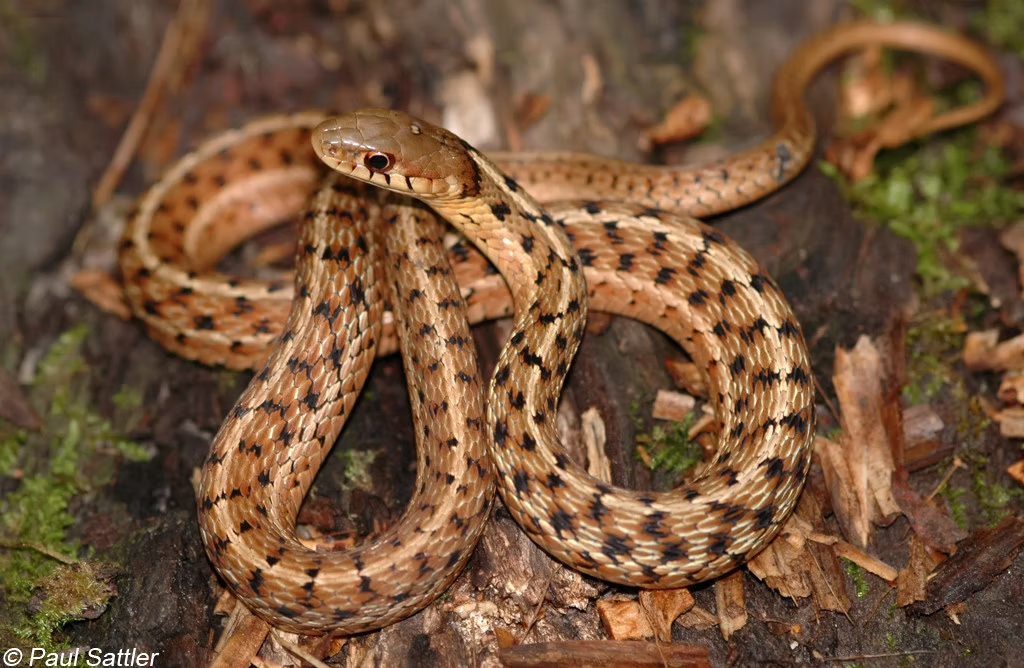
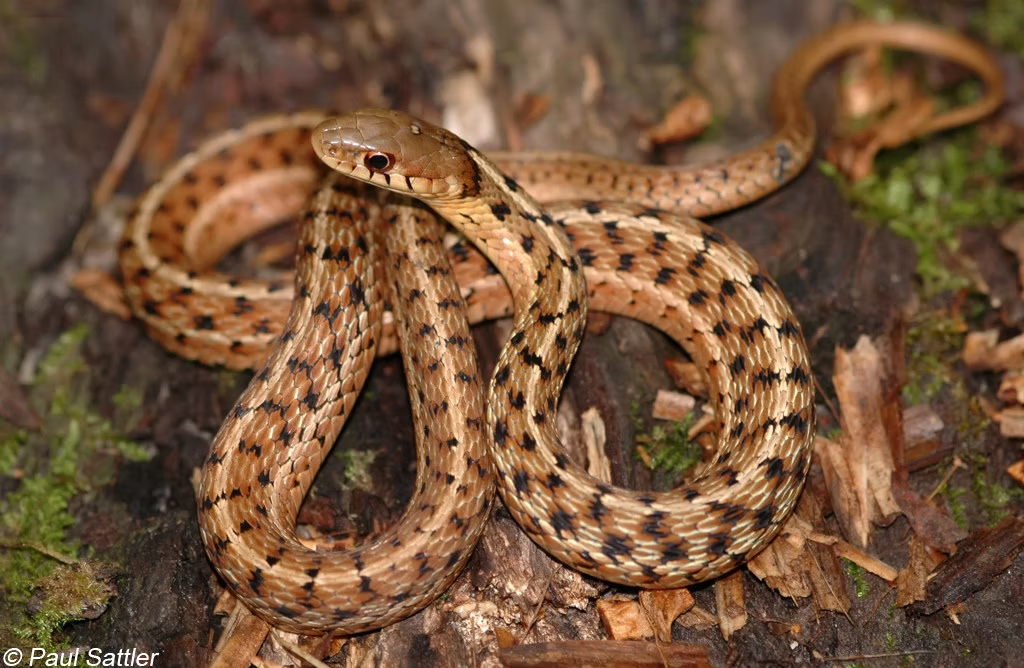
Eastern Garter Snake Harmless

Eastern Garter Snake

Thamnophis sirtalis
Appearance
Slender, 1.5 to 3 ft; olive, brown or black with three pale yellow stripes.
Where you'll see them
Yards, gardens & parks
Lookalike
Ribbon snake, which is more slender with white markings near the eyes.
Virginia's most common backyard snake. Completely harmless - it eats slugs, worms and frogs, and gives birth to live young.
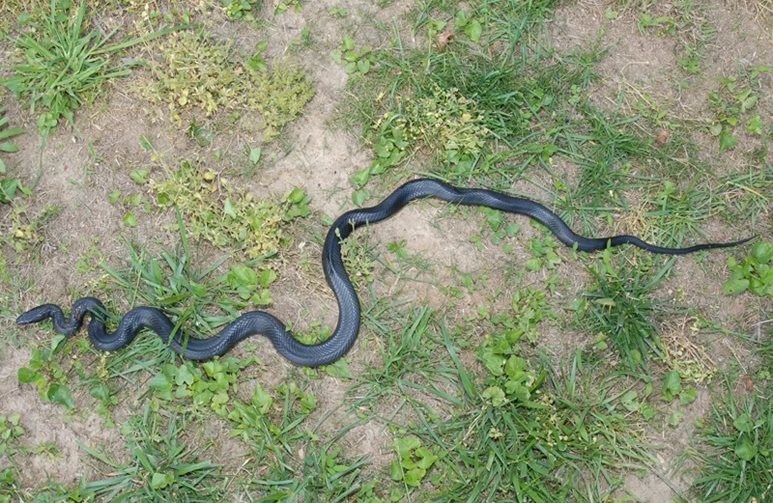
Eastern Rat Snake Harmless

Eastern Rat Snake

Pantherophis alleghaniensis
Appearance
Up to 6 ft; glossy black adults with a white chin; juveniles are gray with dark blotches.
Where you'll see them
Trees, barns & wood piles
Lookalike
Juveniles are mistaken for copperheads, but lack hourglass bands and a yellow tail tip.
Virginia's longest snake - up to six feet of glossy black with a white chin. A superb climber and the area's best rodent control.
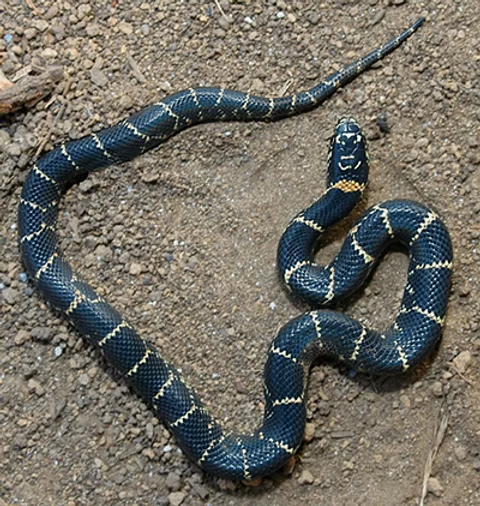
Eastern Kingsnake Harmless

Eastern Kingsnake

Lampropeltis getula
Appearance
Glossy black, 3 to 5 ft, with a pale chain-link pattern of bands.
Where you'll see them
Woods, fields & backyards
Lookalike
Black racer or rat snake, but only the kingsnake has the chain banding.
Glossy black with a pale chain-link pattern. Famously immune to copperhead venom - and it actually eats them.
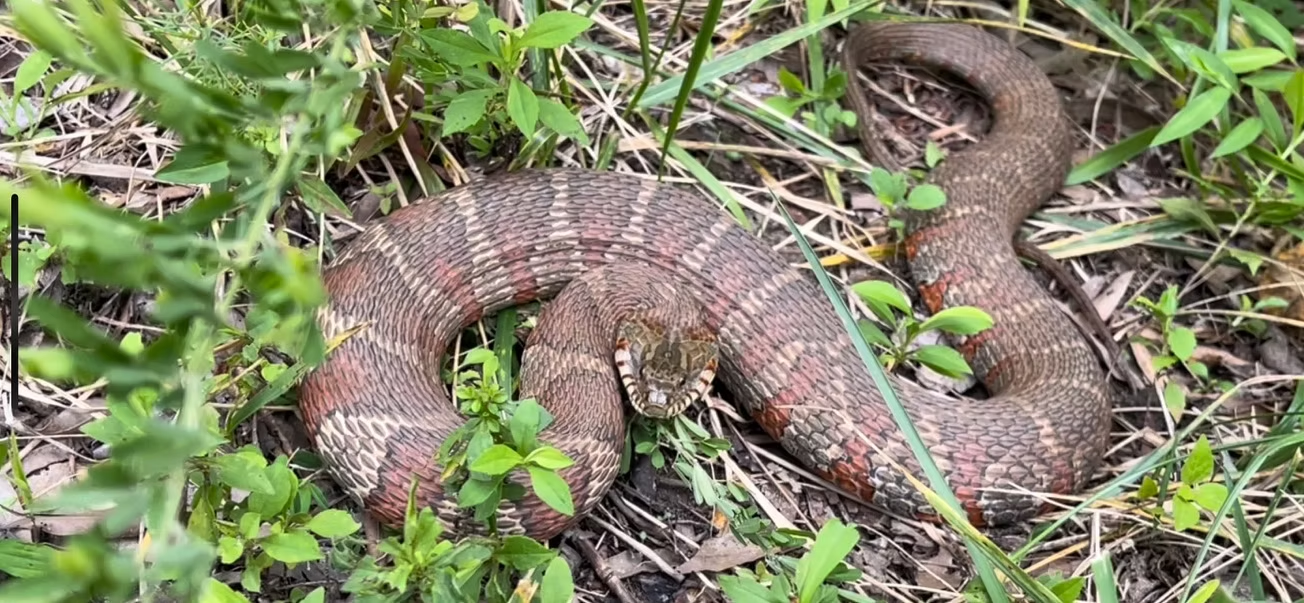
Northern Water Snake Harmless

Northern Water Snake

Nerodia sipedon
Appearance
Thick-bodied, brown or reddish with darker bands; looks almost black when wet.
Where you'll see them
Rivers, ponds & creeks
Lookalike
Cottonmouth, but water snakes have a narrow head and dark bars on each lip scale.
Constantly mistaken for a cottonmouth, but harmless. A strong swimmer that keeps fish and frog populations in balance.
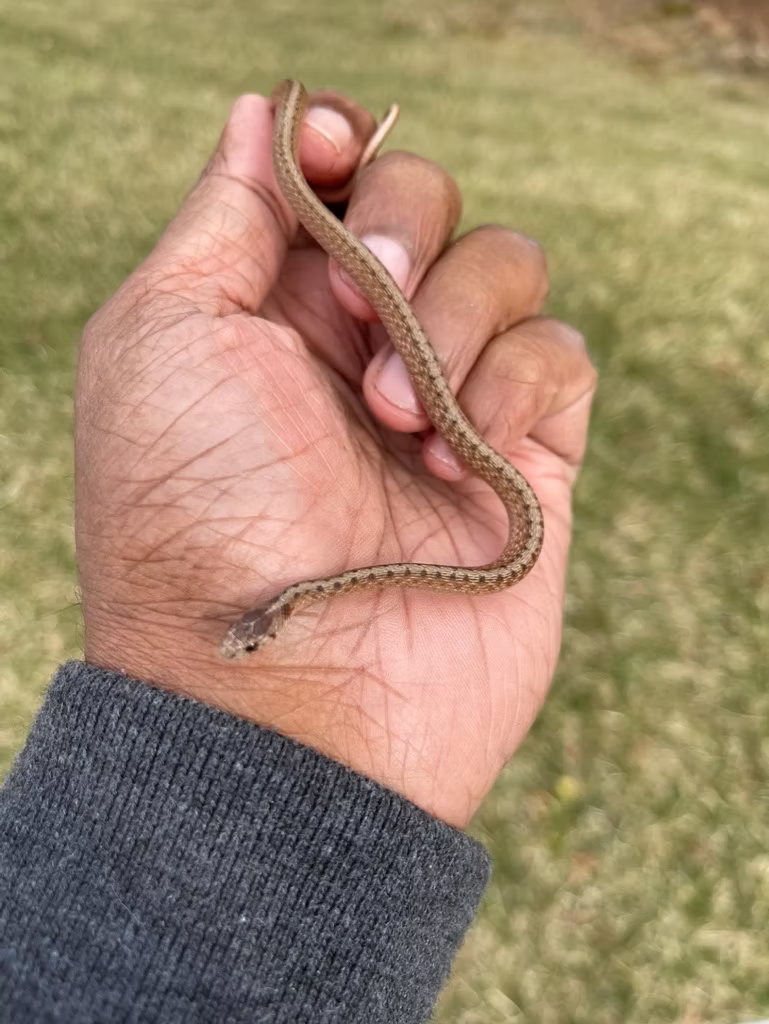
DeKay's Brownsnake Harmless

DeKay's Brownsnake

Storeria dekayi
Appearance
Tiny, 8 to 15 in; brown or gray with two rows of small dark spots.
Where you'll see them
Gardens & leaf litter
Lookalike
Often mistaken for an earthworm or a juvenile of another species.
A tiny, gentle snake rarely longer than a pencil - a gardener's best friend that feeds on slugs and snails.
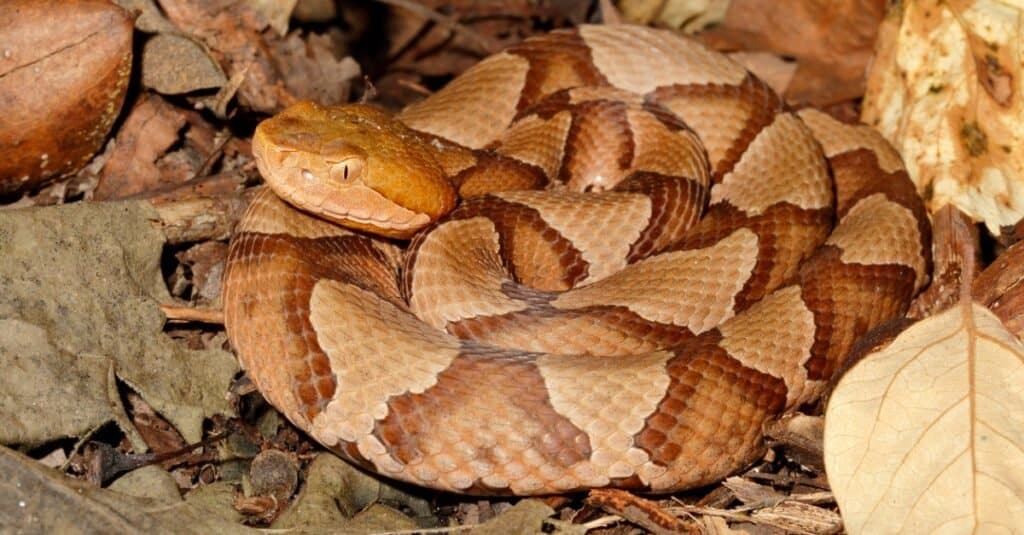
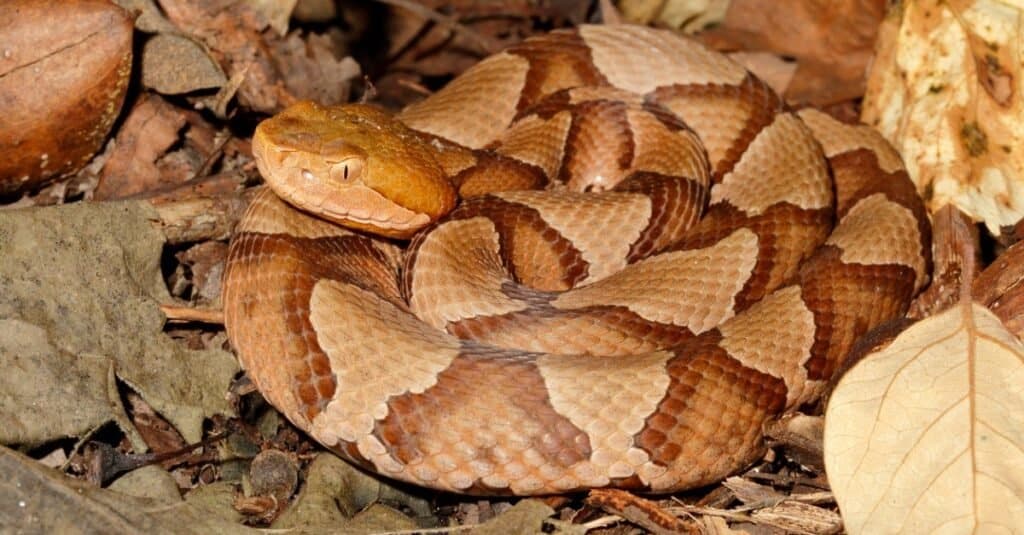
Eastern Copperhead Venomous

Eastern Copperhead

Agkistrodon contortrix
Appearance
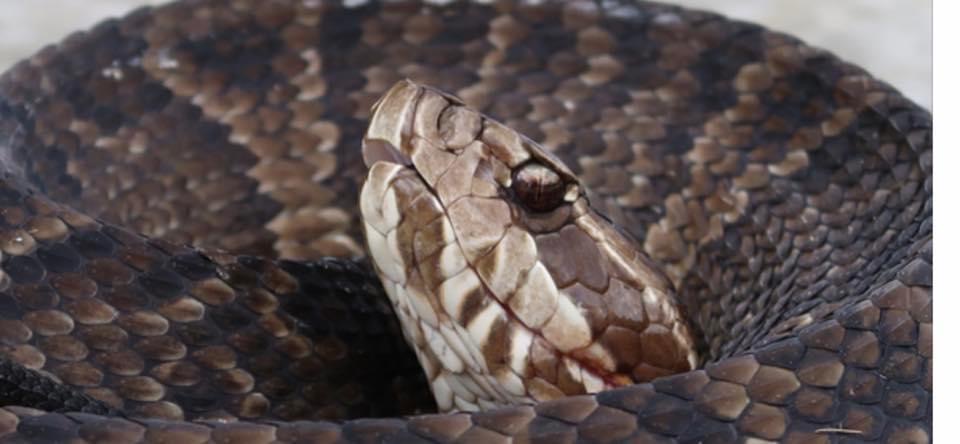
Coppery, triangular head with dark hourglass bands; juveniles have a yellow tail tip.
Where you'll see them
Forest edges & rocky areas
Lookalike
Harmless water, corn and juvenile rat snakes are often blamed for it.
Venomous. Virginia's most common venomous snake, with hourglass bands and a copper head. Bites are rarely fatal - give it room.
Northern Cottonmouth Venomous

Northern Cottonmouth

Agkistrodon piscivorus
Appearance
Dark, thick-bodied pit viper with a blocky head and a dark eye mask.
Where you'll see them
Swamps in far SE Virginia
Lookalike
The harmless Northern Water Snake, but cottonmouths are bulkier with a blockier head.
Venomous. A semi-aquatic pit viper that gapes to flash its white 'cotton' mouth when threatened. Rare across most of Virginia.
Timber Rattlesnake Venomous

Timber Rattlesnake

Crotalus horridus
Appearance
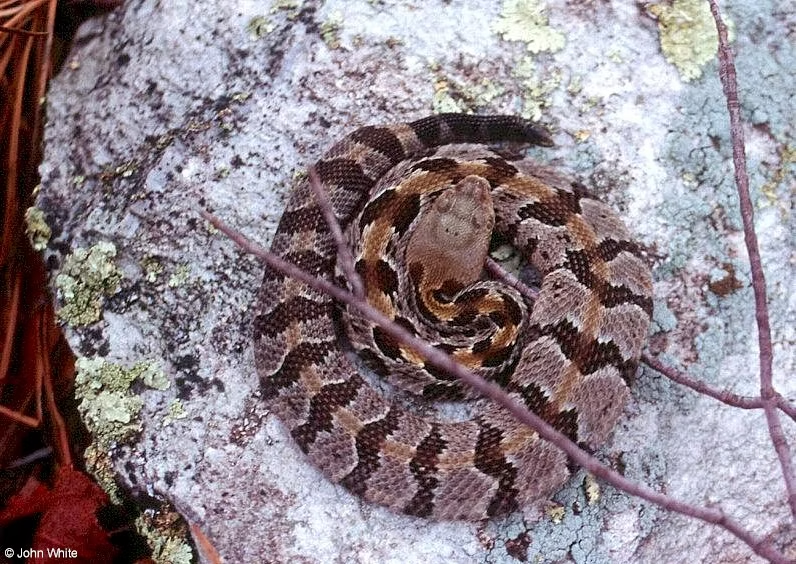
Heavy-bodied, up to 6 ft, with black chevron bands and a rattle on the tail.
Where you'll see them
Mountains & deep forest
Lookalike
Hard to mistake up close; listen for the warning rattle and never approach.
Venomous. A shy, well-camouflaged forest dweller that rattles a clear warning long before it ever strikes.

Not sure which one you're looking at? Tell them apart →

Stay Safe, Stay Kind

Tell them apart

Identifying snakes can be tricky - and a harmless look-alike is often blamed for a venomous one. Here's how to read the clues, stay safe, and let snakes do their job.

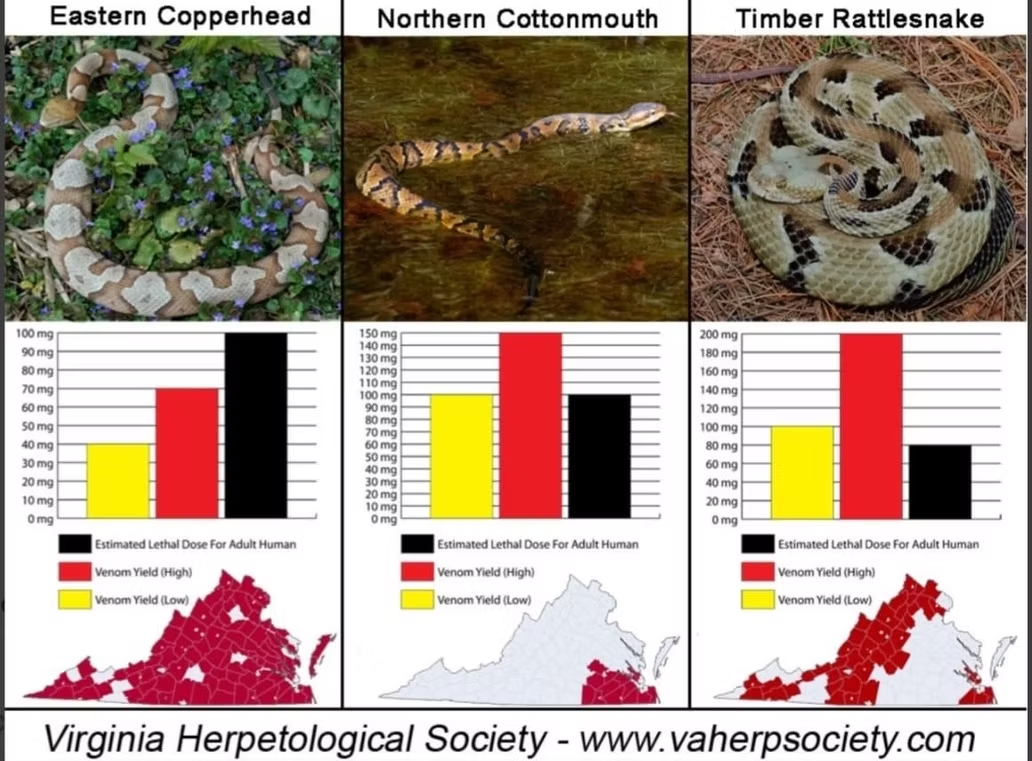
Virginia's three venomous snakes compared
Virginia's three venomous species, compared · Virginia Herpetological Society
  1. 1

    The odds are on your side

    Virginia has 30+ snake species and only three are venomous. The snake in your garden is almost certainly harmless.

  2. 2

    Head shape isn't reliable

    Harmless snakes flatten their heads into a triangle to mimic vipers. Don't judge by shape alone.

  3. 3

    Look, don't touch

    Give any snake about six feet of space and it will move on. Most bites happen when people try to handle or kill them.

  4. 4

    When in doubt, send a photo

    We'll identify it for free, usually within the hour - and relocate it if needed.

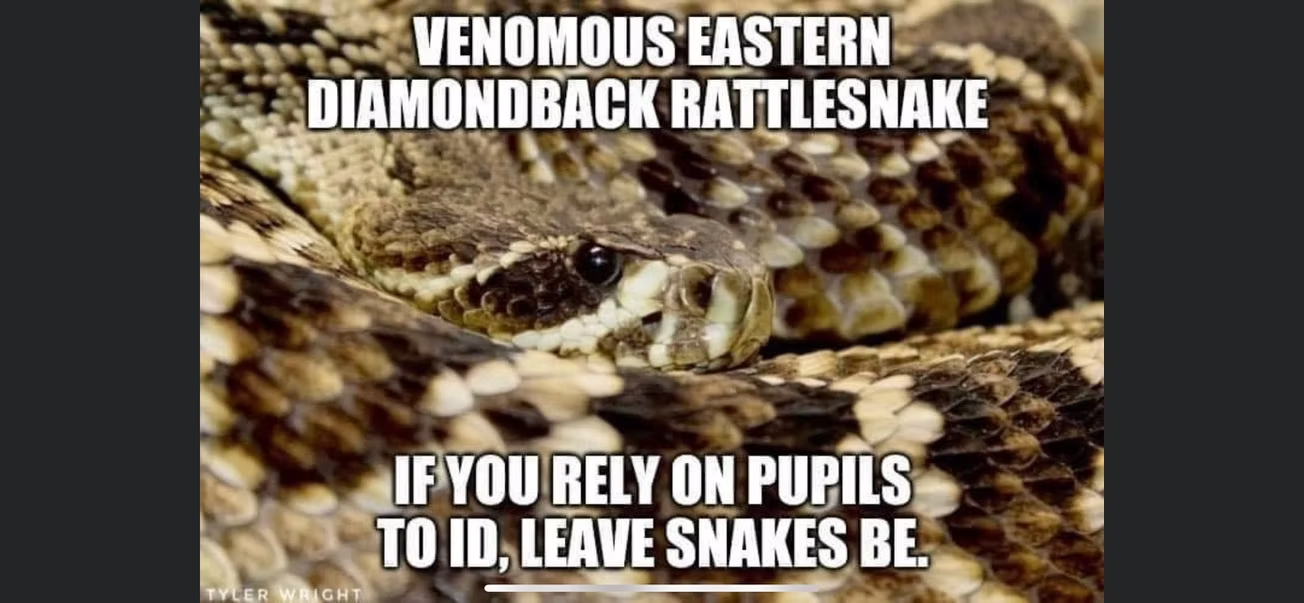
Eastern Diamondback Rattlesnake

"If you have to rely on a snake's pupils to identify it, you are already far too close. Leave snakes be."

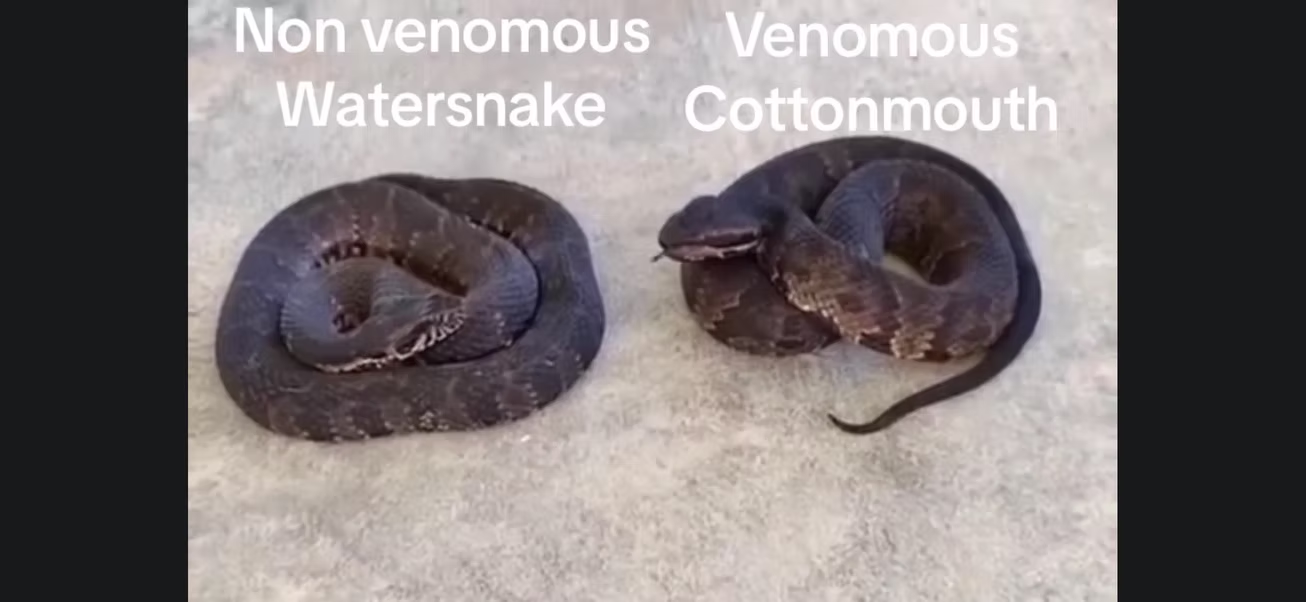
Harmless watersnake next to a venomous cottonmouth
The classic mix-up. Harmless watersnakes are constantly mistaken for venomous cottonmouths. Cottonmouths sit fatter, with a blocky head and a dark eye-stripe.
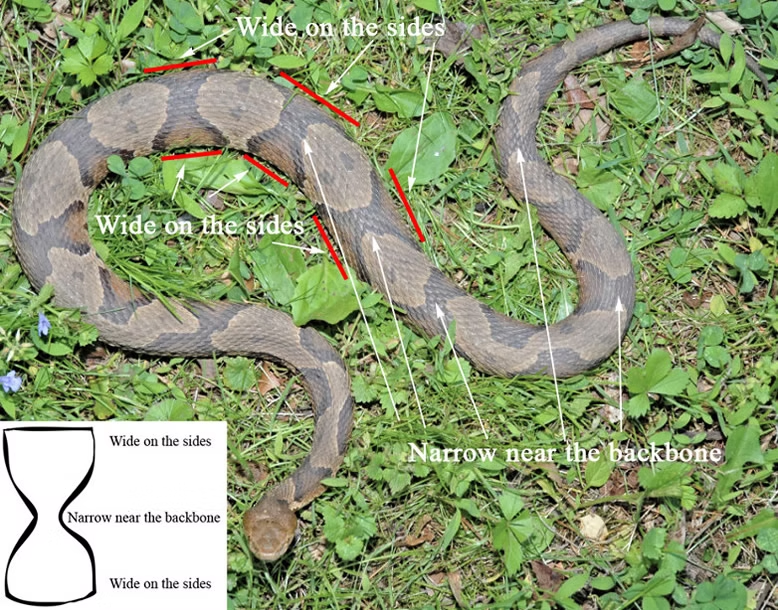
Watersnake banding pattern diagram
Read the bands. On harmless watersnakes the bands are wide on the sides and narrow near the backbone - the opposite of a copperhead's hourglass.
Quick Help

Helpful guides

Short, practical guides for the moments that matter most - tap any topic for the full details.

🏡

Avoid Snakes at Home

Make your yard and home less inviting to snakes.

Read guide →
🤝

Free Snake Rescue

Free, humane relocation and who to call in Richmond.

Read guide →
🚑

Snake Bite Help

Exactly what to do - and not do - if someone is bitten.

Read guide →
🔎

Snake Identification

Tell harmless from venomous and get a quick ID.

Read guide →
Did You Know?

Snake myths, busted

A lot of fear comes from a few stubborn myths. Here's the truth - and why the snake next door is more friend than foe.

Myth

"A triangular head means it's venomous."

Many harmless snakes flatten their heads into a triangle when scared. Shape alone is never a reliable clue.

Myth

"Snakes chase people."

They can't, and they won't. A startled snake flees - sometimes toward the nearest cover, which only looks like a chase.

Myth

"Baby venomous snakes are deadlier."

A myth. Neither babies nor adults want to bite you. Give any snake space and it will simply leave.

Myth

"The only good snake is a dead one."

Snakes are free pest control, eating the rodents that spread disease. A healthy snake means a healthier yard.

Myth

"Vertical pupils mean venomous, round pupils are not venomous."

Sometimes light can cause the pupils appear rounded, and can misidentify a venomous snake as non-venomous.

Who We Are

Our Mission

"Transform human-snake conflicts into coexistence solutions through rescue, education, and proven intervention strategies."
Get Involved

Our organization connects community members with free snake removal services and offers essential educational information about local snakes.

We are volunteer-run and rely on donations to sustain our rescue efforts and outreach programs. Every call we answer, every snake we safely relocate, and every community member we educate brings us closer to a world where humans and snakes can coexist.

From the Blog

Latest Updates

Eastern Copperhead
Education

Understanding Virginia's Snakes: Facts and Identification

Virginia is home to around 30 snake species. Learn how to identify venomous and non-venomous varieties, safety tips, and their role in the ecosystem.

savesnakes.org · Sep 5, 2025 · 6 min read
👁 88 views Read More →
Eastern Garter Snake
Education

Slithering Friends: How to Safely Coexist with Snakes in Richmond

Learn how snakes help the world, how to keep them away from your yard, safety tips for outdoor activities, and what to do in case of a snake bite.

savesnakes.org · Sep 5, 2025 · 5 min read
👁 0 views Read More →
Reach Out

Contact Us

Need a snake removed? Have a question? We're here to help. Reach us by phone or fill out the form.

(804) 404-5594
Call Now WhatsApp
savesnakesorg@gmail.com
Richmond, VA, USA

Fill out the form below and we'll get back to you as soon as possible.

We typically respond within 24 hours.

Stay Connected

Follow Us

Follow our rescue stories, snake education content, and community updates on social media.

Find us onFacebook Follow us onInstagram Watch us onYouTube